
 admin
octubre 30, 2025
No hay comentarios
admin
octubre 30, 2025
No hay comentarios
HomeAndean Cuisine & CulturePachamanca in Pacchanta: An Ancestral Flavor beneath Ausangate
Pachamanca in Pacchanta: An Ancestral Flavor beneath Ausangate
admin
octubre 30, 2025
No hay comentarios
In the heart of the Ocongate district, over 4,300 meters above sea level, lies Pacchanta, a small Andean community surrounded by crystal-clear lagoons, grazing alpacas, and the majestic Ausangate Glacier.
Among its natural wonders and hot springs, there’s one activity that captures the spirit of the Andes: the Pachamanca in Pacchanta, a culinary experience that blends gastronomy, culture, and community.
At Pacchanta Lodge, visitors can take part in this unique activity that preserves the essence of ancestral Andean cooking, where earth, fire, and native ingredients come together to create a meal that goes far beyond food.
What Is a Pachamanca?
The Pachamanca is one of the most profound expressions of Andean culture. Its name comes from the Quechua words pacha (earth) and manka (pot), literally meaning “earth pot.”
More than just a dish, it is a ceremony of gratitude to the Pachamama, the Mother Earth who provides food and life. In Pacchanta, this ritual is preserved just as it was by the ancestors—using hot volcanic stones, organic ingredients, and community collaboration.
Organic Ingredients from Pacchanta
In this part of Cusco, ingredients aren’t just fresh—they grow directly from the same soil that nourishes the Ausangate range.
The Pachamanca in Pacchanta is prepared with 100% organic and local products:
- Native potatoes grown at over 4,000 meters above sea level.
- Alpaca meat, raised naturally in the high-altitude pastures of the community.
- Corn, sweet potatoes, moraya (freeze-dried potatoes), plantains, and aromatic herbs like chincho and huacatay.
- The meal is accompanied by chicha de jora, a traditional fermented corn beverage.
These ingredients provide not only flavor but also identity and sustainability, reflecting the lodge’s commitment to traditional agriculture and environmental respect.
How the Pachamanca Is Prepared in Pacchanta
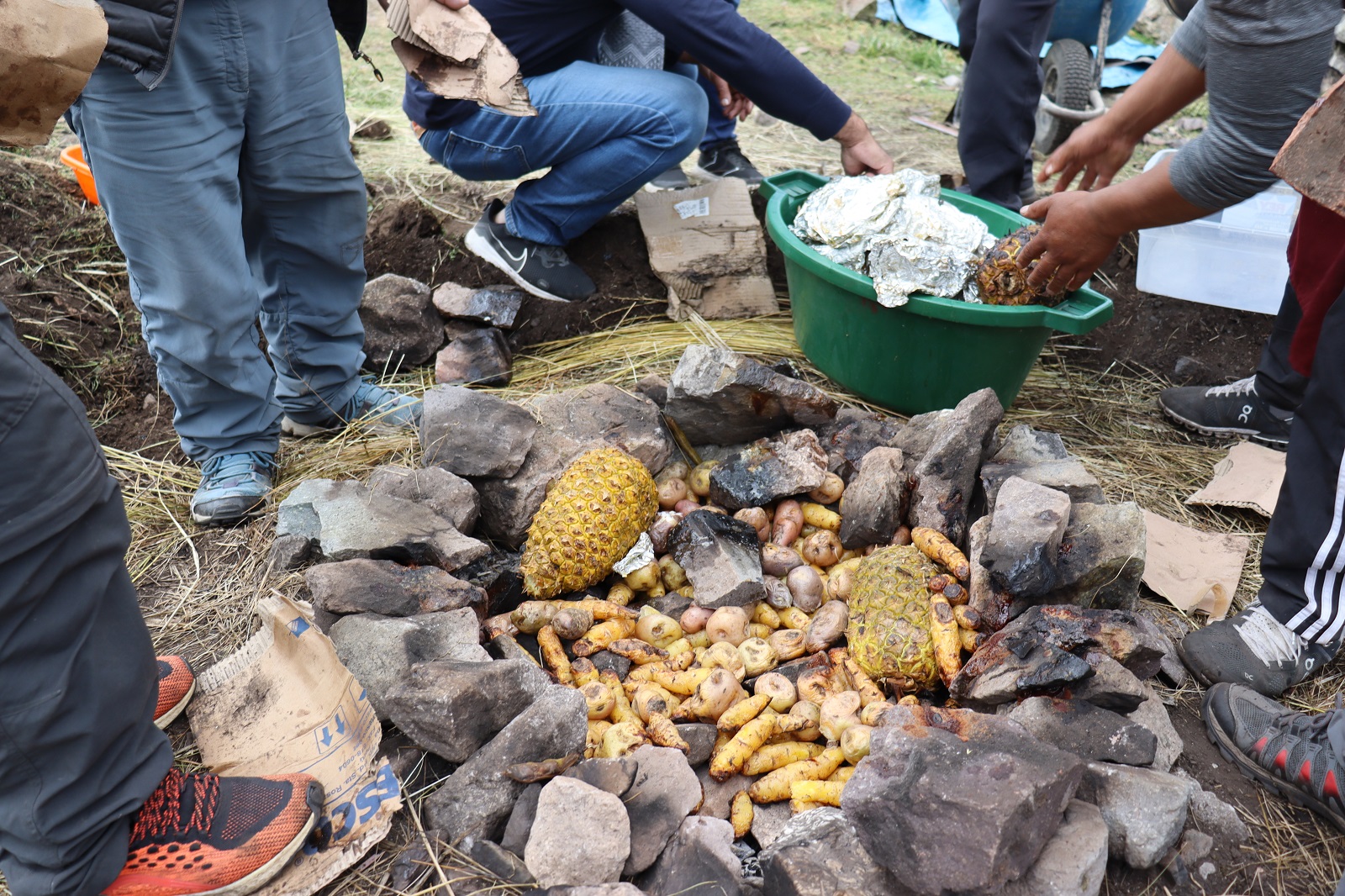
The cooking process itself is a ceremonial act. Local hosts begin by lighting a wood fire and heating volcanic stones until they glow red. These stones will serve as the natural oven where the food will cook slowly underground.
Once the stones are ready, they are placed in a pit dug into the ground. With the help of the visitors, layers of food are arranged—first the marinated meats, then the potatoes, corn, and other products. Everything is finally covered with herbs and soil.
While the food cooks, travelers enjoy traditional chicha, listen to local stories, or simply admire the view of Ausangate Mountain. This waiting time symbolizes the harmony between earth, fire, and community.
The Moment of Truth: Uncovering the Pachamanca
After about an hour, the hosts carefully remove the earth covering the pit. Steam rises, filling the air with the unmistakable aroma of the Pachamanca in Pacchanta.
The native potatoes are tender, the alpaca meat juicy, and the combination of earthy and herbal aromas creates a unique flavor only found in the Andes.
This is the moment everyone looks forward to—the sharing of the meal. Locals and travelers gather together, celebrating the effort and the joy of cooking with the earth itself.
A Participatory and Spiritual Experience
At Pacchanta Lodge, the Pachamanca is not a tourist show—it is a genuine cultural experience. Visitors are invited to take part in every step: heating the stones, placing the ingredients, and uncovering the food.
This active participation turns the event into a communal and spiritual connection, where everyone contributes to preparing a sacred meal.
Before starting, hosts often make a small offering to the Pachamama, thanking her for the food and the opportunity to share. It’s a powerful moment of Andean spirituality and reciprocity, deeply rooted in respect for nature.
Flavors that Tell a Story
Each ingredient in the Pachamanca carries centuries of tradition. The native potatoes represent Andean biodiversity, the alpaca meat reflects ancient highland livestock practices, and the moraya showcases traditional preservation techniques using cold and sunlight.
Together, these elements create a dish that feeds both the body and the soul. This is why the Pachamanca in Pacchanta is more than just food—it’s a living cultural legacy, full of meaning and gratitude.
Pacchanta Lodge: Hospitality and Ancestral Flavor
Pacchanta Lodge is the perfect setting for this immersive experience. Surrounded by mountains, green pastures, and thermal baths, it offers a warm and comfortable environment where visitors can rest, eat well, and connect with local life.
The lodge features cozy rooms with private bathrooms, hot showers, and panoramic views of the Ausangate Glacier. After enjoying the Pachamanca, many travelers relax in the Pacchanta Hot Springs, a perfect combination of gastronomy and natural wellness.
The local staff guides visitors through the entire process, sharing stories and traditions with kindness and authenticity. Each visit becomes a memorable and meaningful exchange.
Sustainability and Local Impact
One of the most valuable aspects of this experience is its sustainable focus. All the ingredients used in the Pachamanca come directly from local farmers and herders, supporting the rural economy and reducing environmental impact.
By participating, travelers don’t just enjoy an Andean meal—they also contribute to the responsible development of rural tourism in the Ausangate region.
The Pachamanca in Pacchanta is therefore an example of how tourism can help preserve traditions while empowering local communities.
How to Join the Experience
The Pachamanca in Pacchanta Lodge can be booked as part of a 7 Lagoons of Ausangate tour, a Rainbow Mountain trek, or as a standalone activity for those who want a day of cultural immersion.
Includes:
- Guided participation in preparing the Pachamanca.
- Fresh, organic ingredients.
- Full tasting of all dishes.
- Traditional drink (chicha de jora).
- Local guide and cultural explanations.
Tips to Make the Most of It
- Arrive early: The full experience takes about 2 to 3 hours.
- Participate: Join in heating the stones or layering the ingredients.
- Dress warmly: Pacchanta’s high altitude means cold weather, especially in the afternoon.
- Respect the ritual: Remember, the Pachamanca is a sacred ceremony, not just a meal.
- Enjoy the surroundings: Combine it with a visit to the hot springs or nearby lagoons.
A Journey Beyond Food
To enjoy a Pachamanca in Pacchanta is to take part in a living heritage of the Andes. It’s about feeling the connection between earth, fire, and community—a moment of gratitude that reminds us where our food comes from.
It’s also an invitation to slow down, to appreciate the collective effort, and to reconnect with the wisdom of the land.
While modern cuisine dominates the world, Pacchanta keeps alive the ancient art of earth cooking—a patient, loving, and communal act that honors both people and nature. Every traveler who takes part leaves not just with a full stomach, but with a spiritual memory of Ausangate.
Related articles

-
30 octubre, 2025
-
No Comments
High in the Peruvian Andes, food is more than nourishment—it’s a cultural expression, a link to the past, and a...
Recent Blog
Difference Between Pachamanca and Huatia
High in the Peruvian Andes, food is more than nourishment—it’s a cultural expression, a link to the past, and...
Read More