
 admin
octubre 30, 2025
No hay comentarios
admin
octubre 30, 2025
No hay comentarios
admin
octubre 30, 2025
No hay comentarios
admin
octubre 30, 2025
No hay comentarios

High in the Peruvian Andes, food is more than nourishment—it’s a cultural expression, a link to the past, and a ritual of gratitude to nature. Among the most iconic dishes are the Pachamanca and the Huatia, two ancient forms of cooking that use earth, fire, and stone as the main tools.
Both techniques come from pre-Inca times and reflect the Andean people’s deep respect for the Pachamama (Mother Earth). But despite their similarities, these dishes differ in their preparation, ingredients, symbolism, and the experience they offer.
If you’ve ever wondered what makes them unique, this guide will help you understand the difference between Pachamanca and Huatia—and why both remain at the heart of Andean gastronomy.
What Is a Pachamanca?
The Pachamanca is one of the most emblematic culinary traditions of Peru. Its name comes from the Quechua words pacha (earth) and manka (pot), meaning “earth pot.”
This dish represents a ceremony of gratitude to the land and to nature for providing food.
In modern experiences like the Pachamanca in Pacchanta, near the sacred Ausangate Mountain, travelers can witness and participate in the full ritual—from heating the stones to uncovering the cooked food. It’s a communal and spiritual event, not just a meal.
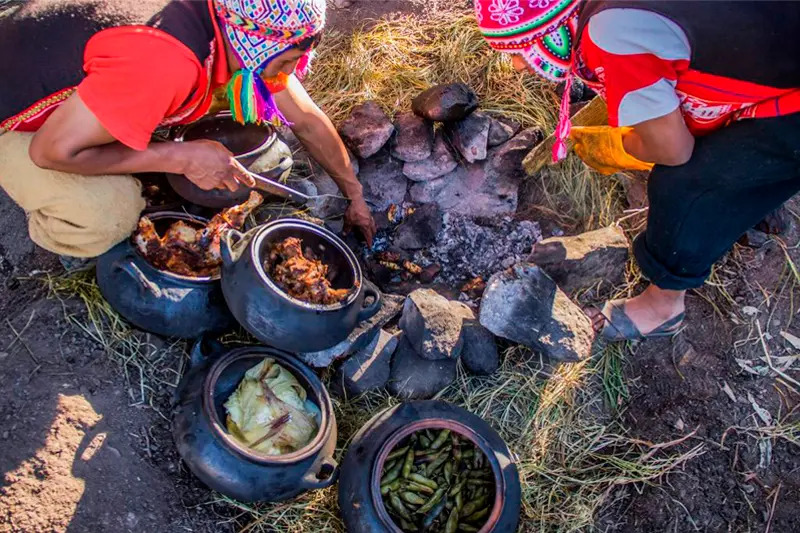
How It’s Prepared
To make a Pachamanca, locals heat volcanic stones over a wood fire until they glow red. These stones are placed at the bottom of a pit dug into the ground. Then, they layer in marinated alpaca or lamb meat, native potatoes, sweet potatoes, corn, and moraya (dehydrated potato). Everything is covered with aromatic herbs like chincho and huacatay, then sealed with earth so it cooks slowly underground.
After about an hour, the pit is opened, releasing a wave of fragrant steam—the unmistakable aroma of Pachamanca. The flavors are smoky, earthy, and rich, offering a taste that connects past and present.
What Is a Huatia?
The Huatia is another ancient Andean cooking method, even simpler and older than the Pachamanca. It’s especially popular during the potato harvest season in the highlands of Peru and Bolivia.
The word Huatia also comes from Quechua and refers to a temporary stone oven built on the ground. Farmers shape a dome or pyramid of clay and stones, heat it with firewood until it’s extremely hot, and then collapse the structure to place the potatoes inside.
Unlike the Pachamanca, the Huatia doesn’t use meat, marinades, or herbs. It’s a pure and minimalist expression of earth-cooked food.
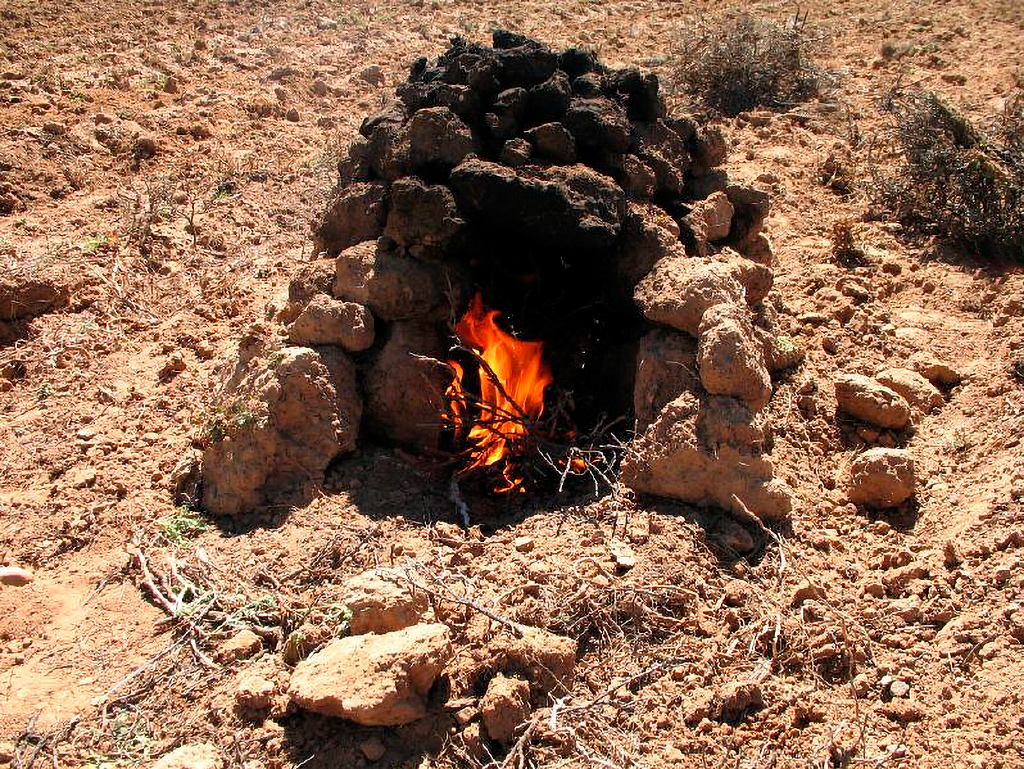
Flavor and Simplicity
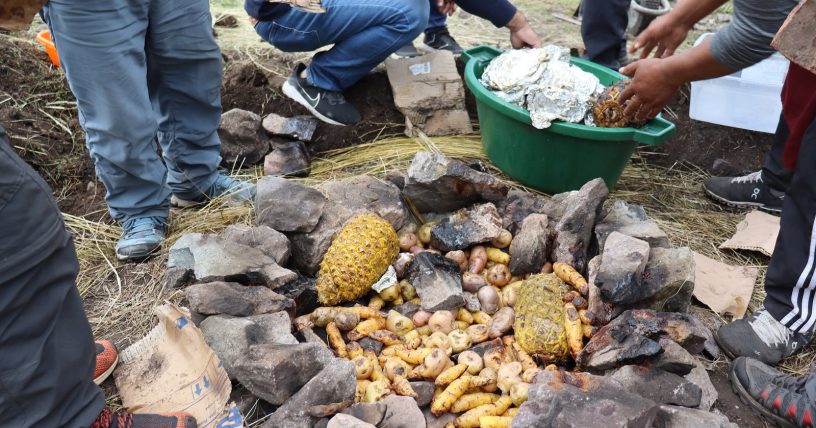
The magic of the Huatia lies in its simplicity. Freshly harvested potatoes are buried in the warm ashes and left to bake naturally. When they’re ready, their skin becomes crisp while the inside turns creamy and slightly sweet.
They’re typically served with fresh cheese, eggs, or chicha de jora (fermented corn drink). It’s the taste of the Andes at its most authentic—simple, earthy, and comforting.
Main Differences Between Pachamanca and Huatia
| Aspect | Pachamanca | Huatia |
|---|---|---|
| Meaning | “Earth pot” – a ritual meal of gratitude to the Pachamama. | “Earth oven” – a traditional way of baking potatoes. |
| Cooking Method | Uses a pit with hot stones heated by fire and covered with soil to trap heat. | Uses a temporary dome of clay and stones that collapses to bake potatoes in ashes. |
| Ingredients | Alpaca or lamb meat, native potatoes, corn, sweet potato, moraya, herbs. | Mainly potatoes, sometimes served with cheese or eggs. |
| Flavor Profile | Smoky, seasoned, and complex due to herbs and marinated meat. | Pure, earthy, and naturally sweet, emphasizing the potato’s flavor. |
| Cultural Use | Ceremonial, communal, often prepared for special events or tourists. | Everyday practice, especially during harvest season in rural communities. |
Cultural Significance
Both the Pachamanca and the Huatia symbolize the Andean connection to the land, but in different ways.
- The Pachamanca is a communal ritual, performed during festivals, weddings, or community gatherings. It represents abundance, gratitude, and unity.
- The Huatia, by contrast, is intimate and spontaneous—a humble act performed by farmers in the field to celebrate a good harvest.
In experiences like the Pachamanca in Pacchanta, visitors can witness this spirit firsthand: the participation of locals, the music, the prayers to the Pachamama, and the joy of sharing food cooked by the earth itself.
Modern Relevance
Today, both traditions continue to thrive, not only in rural communities but also as culinary tourism experiences in Cusco, Ayacucho, and Huancayo.
The Pachamanca in Pacchanta, especially, has become a highlight for travelers exploring the Ausangate and 7 Lagoons Trek. It allows visitors to learn how ancestral cooking techniques merge with modern hospitality while supporting local families and organic farming.
Meanwhile, the Huatia remains a staple of everyday life in the highlands—a reminder of simplicity, sustainability, and respect for the earth.
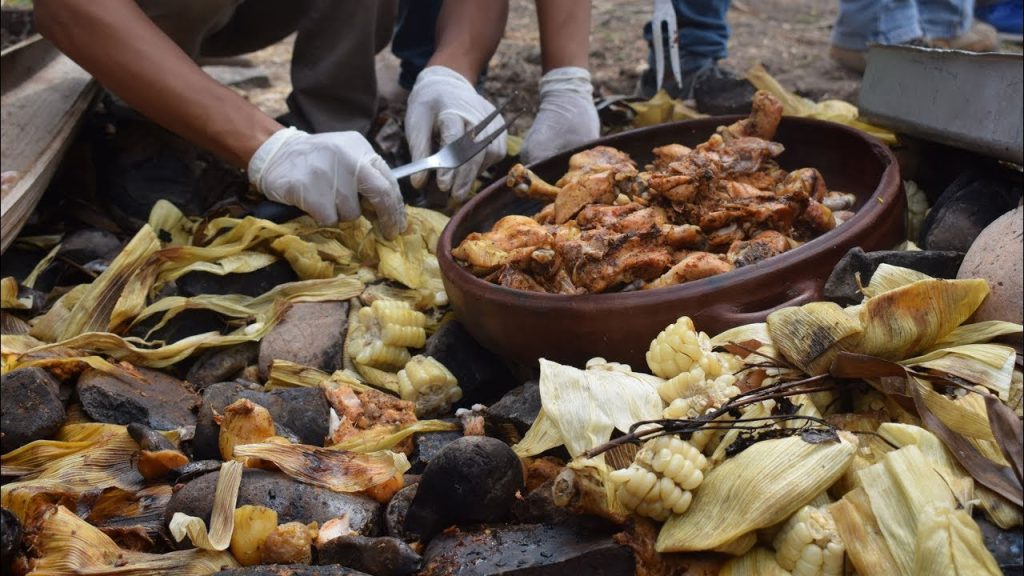
Why You Should Try Both
If you’re planning a trip to the Andes, tasting both the Pachamanca and the Huatia is like traveling back in time.
The Pachamanca in Pacchanta offers a full culinary and cultural immersion—you help heat the stones, place the food, and share the meal with locals. It’s perfect for those who love authentic and participatory experiences.
The Huatia, on the other hand, offers a more casual, rustic encounter with Andean cooking—ideal for travelers visiting small villages or farms in Cusco or Puno.
Together, they show the depth of Andean gastronomy, where every ingredient and method carries centuries of wisdom.
Recent Blog
Pachamanca in Pacchanta: An Ancestral Flavor beneath Ausangate
In the heart of the Ocongate district, over 4,300 meters above sea level, lies Pacchanta, a small Andean community...
Read More